Sunday, July 20, 2014

Power Support Airjacket for iPhone 5S


A dent evident on frame of Apple iPhone 5S near the volume control button.

Regrettably, the Air Jacket case has failed its mission to protect the iPhone 5S. However it did successfully protected my iPhone 5S from a nasty scratch as shown on the picture below. The screen is intact, impact from left edge of the phone inevitably caused a dent on the aluminium frame of the nice to look at but weak Apple product.

Nasty scratch protected by Power Support Airjacket for iPhone 5S.

Thursday, November 28, 2013

ALO audio "The Continental v3" with Astell and Kern AK100


29/Nov/2013 Update: I had acquired a new ALO audio "The Continental v3" tube hybrid amplifier and currently am tagging the AK100 along with it. Reviews would come in the (not too distant) future.

As seen from above, the current setup consists of the following in order - Astell & Kern AK100, ALO audio SXC-18 mini - mini interconnect - ALO audio "The Continental v3" Portable Hybrid Tube Amplifier.

In case if any of you are wondering how I stick the two unit together so nicely, it was done with the help of 3M Command Velcro :) really handy stuff..

To be able to properly evaluate, I need to first replace my aged UE Triple.Fi 10 IEM and let the amplifier break-in (not to mention the new Roxannes need to break in as well.)

Battery life of the Continental v3 seems to be between 7 - 8.5 hours, depending on the load. The amplifier gets quite hot during use but the heat will not be sufficient to cause burns although keeping the amplifier in your bag or pocket may trap the heat and in turn shorten the lifespan of the unit (not to mention being uncomfortable if it is in your pocket).

As of current moment, the connection port for my UE Triple.Fi 10 is already worn beyond salvation and I am still (patiently?) awaiting the arrival of my JHaudio Roxanne CIEM.

ALO Audio SXC-18 mini interconnect Review

ALO Audio SXC-18 mini interconnect Review

Disclaimer: This is not a sponsored review and "sound" for that matter is completely subjective and likewise is personal preference. What is stated in this review is only my opinion and may serve as your guideline on what to expect, if you wish to.

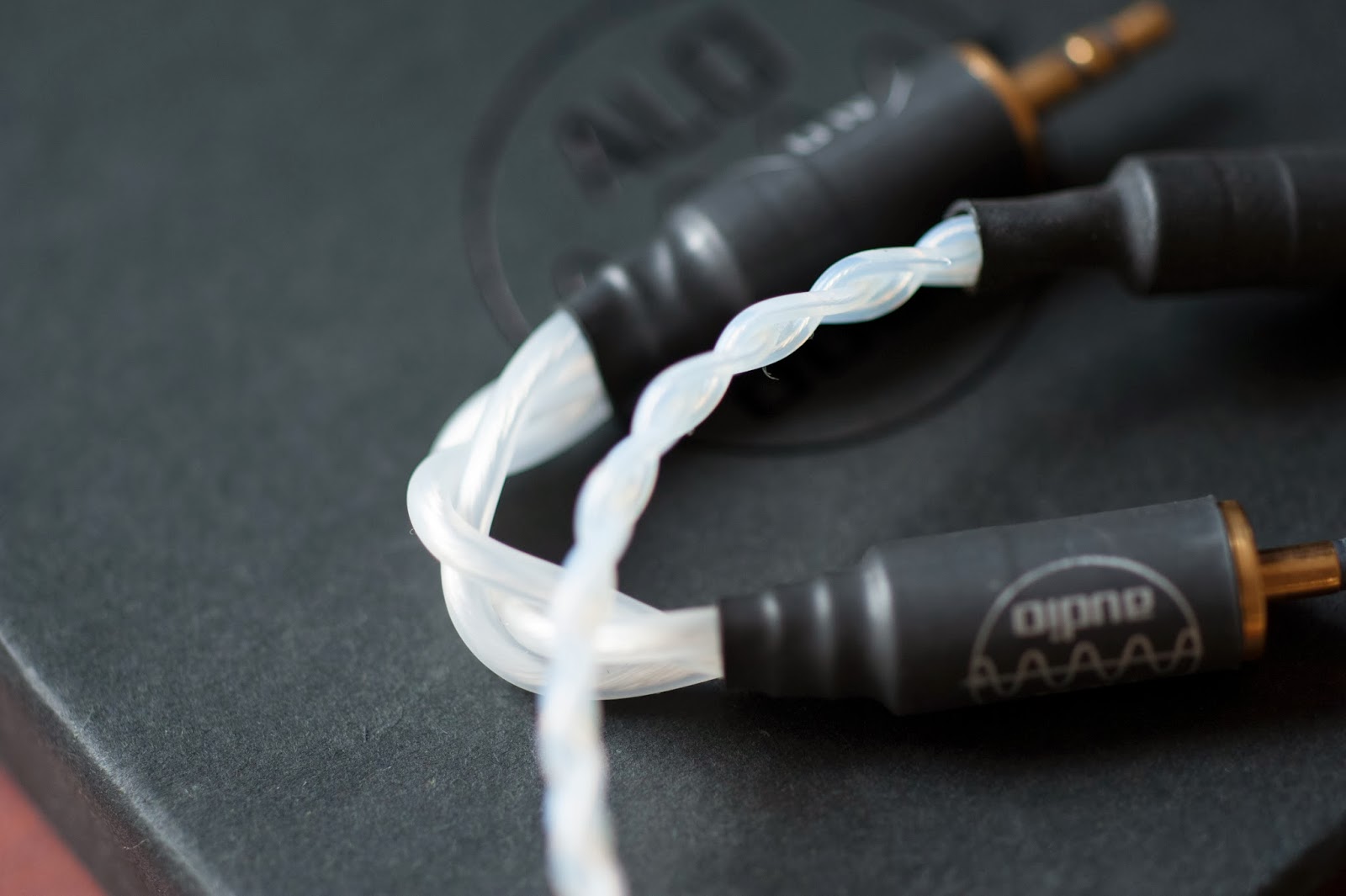
ALO Audio's SXC-18 silver plated mini-mini interconnect for portable application.
 
For those who do not know, ALO Audio is relatively quite well known for their high quality audiophile grade wires. Interconnects such as the one being reviewed in this article is used to connect the output of DAPs (Digital Audio Players), such as those of Astell & Kern AK100 or the newer AK120 to a portable headphone amplifier such as ALO Audio's "The Continental v3". Such elaborated configuration is required for higher impedance headphones or IEMs (in-ear monitors) to provide enough power for driving them, allowing them to run at their full potential.
 
Audio players such as iPhones and iPods does have built in headphone / earphone amplifier. However, these devices could not afford enough space to provide an amplifier powerful enough to release the full potential of high impedance headphones such as the Sennheiser HD800 or for the matter, the Etymotic ER4S IEM (which has 75Ohms impedance). The most obvious result of such low powered amplifier was the soft music that lacked any body or impact, making you feel like throwing the all time expensive HD800 into the rubbish bin in favor of cheaper easier to drive alternatives.
 
ALO audio provides a range of selection on cable termination options such as mini - iPod line out dock, mini - mini, compact mini - compact mini (essentially right angled mini connections but at a significantly higher price) and two different cable sizes (SXC-18 and SXC-22) with the numbers indicating the cable size (18G vs 22G). They also offer non-silver plated copper cables if that is your preference.
 
Silver plating provides a more neutral sound compared to copper only cables. Copper only cables generally, in my opinion, provides a warmer sound which may be more to the liking of some others.
For that matter however, ALO audio doesn't provide 18 gauge sized copper only interconnect but they do have "Reference 8" which were made up of 4 copper and 4 silver plated strands that, in my opinion again, gives a slightly warmer sound than that of SXC-18 at 1/3 additional costs. They also offer "The Green Line" interconnect which costs below SGD$100 if costs is the limiting factor, but I'm not going to mention anything on that since I have yet to try it.
 
Sound Impression and costs justification
The interconnect I had got from Jaben years ago (I think it was 6 years ago) and the SXC-22 would be my reference with regards to most of the comparison. I had tried ALO audio's Reference 8 in both iPod line out and mini - mini configuration before but had not had enough time to be able to evaluate them. I had been using the thin little silver interconnect for 6 years and was impressed by the neutrality of the sound compared to the even cheaper (but destroyed) copper interconnect I originally started out with. This originally impression, was completely obliviated after trying out the SXC-22. The larger gauge cable simply provides an unmatched fuller bodied sound I was used to. SIMPLY. The SXC-18 provides even more but body but probably does not justify for an almost 100% costs increase from SXC-22. However, one has to realize that price and performance is not a linear correlation. It has always been an exponential function. I chose the SXC-18, until now (actually only a week) I had not regretted my decision when the sound feel noticeably fuller and wider.
 
One thing to note: These wires (including the small gauge wire from Jaben) are flexible but there is a certain limit you can flex them if you do not wish to break them. They also retained the shape you bent them into quite well. Generally the larger gauge wires would retain the shaper better. If flexibility is the priority, I think a cheaper wire or smaller gauge wire should be higher in the consideration list.
 
The SXC-18 mini to mini interconnect comes in small box (but relatively big to the interconnect's size).

ALO audio's packaging consists of a sleeve with sticker indicating the product that it holds securing the box.
 
The SXC-18 is being held in a small foam pack inside the box. I could not think of a better way of packaging the product than what is already done :)

ALO audio's SXC-18 (below) and some unknown brand silver plated interconnect from Jaben (top)

The price you are paying for is mainly for the size of the cable. It is actually oversized for such application. ALO audio's SXC-18 uses a 18 gauge silver plated cable, compared to the unbranded from Jaben (looks like 31 gauge from guesstimate).
 
Photos taken with Nikon D700 on PC micro Nikkor 85mm f/2.8
 
Richard (29/Nov/2013)

Friday, November 22, 2013

Astell & Kern AK100 Digital Audio Player (DAP) Review

Astell & Kern AK100 Digital Audio Player (DAP)

My first digital audio player was a Sony MD (MZ-R55) (mini disc - for those who don't know) player, followed by another MD player from Sony (MZ-N10), a magnesium alloy 10 year anniversary edition with Li-ion rechargeable battery and MDLP support (simply low quality compressed ATRAC3 support). I subsequently switched to Apple iPod mini (1st Gen) since I couldn't afford the full size iPod. Little do I know at that time apple actually did use high grade Wolfson DACs in their iPods (except for the minis). Apple no longer utilizes Wolfson DACs for their iPods after the 5.5 generation. Well, I did purchase a iPod Touch (1st generation) after the iPod mini. When I got my first iPhone (3GS, followed by 4S), I no longer use an iPod since the iPhone could functionally replace the dedicated music player.

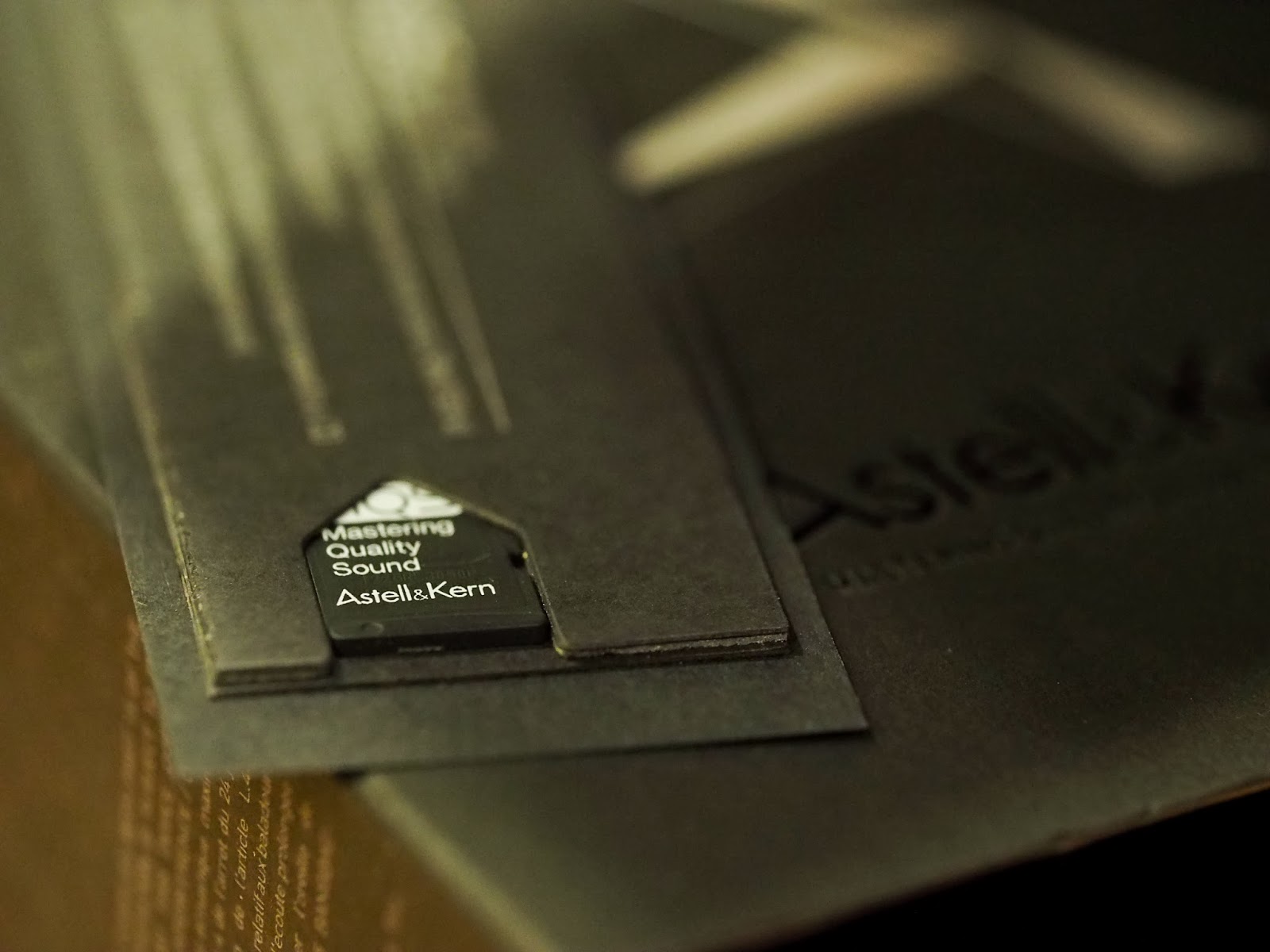
The AK100 comes with a 5 song MQS sample which allows you to savior the taste right out of the box (not to worry, the AK100 is charged!)

A few months back, it came to my realization that I needed some dedicated audio player to better utilize my IEMs (currently a UE Tripple.Fi 10 and Etymotic ER-4s) and the headphone amplifier I purchased while I was still enthuthestic about high quality audio (currently a TTVJ Millet Hybrid Tube). I went to order a pair of CIEMs (JH Audio's Roxanne), without hesistation, after a short audition session with the JH16 Pro. Together with the purchase, I also picked up a GoVibe Vulcan+ solid state headphone amplifier and the Astell & Kern AK100 DAP. I shall write about the GoVibe Vulcan+ and Roxannes elsewhere when I have the time.

The AK100 accepts two uSD cards (micro SD) as expandable storage, with support up to 32GB per card (at firmware 2.30).

The Player

Main difference between AK100 and AK120 on paper was (to me) only lower output impedance and double Wolfson DAC for the AK120. The use of Wolfson DACs were a selling point for these two iriver audio players. I decided to go for the AK100 since I double I would be able to hear any significant difference that could justify almost double the price of the AK120 (SGD14xx). As such, I've got the silver edition of the AK100 player, not because I wanted silver but just so happen that it was the last available unit at the time I decided to purchase. Part of the decision was because there was no AK120 available for audition at the moment of purchase or perhaps I was just too reluctant to ask and spend twice the amount for what I did for AK100.

You may wish to purchase Astell & Kern MQS Selections, in micro SD format - ready for the AK100!

The player plays almost all audio formats you can throw in with the current firmware version (v2.30). File transfer from computer to player was as easy as copying from one hard disk to another external drive. The latest firmware version also allows you to use the DAP as a USB DAC, which I find it particularly useful especially I do not own a USB DAC and I can easily connect the AK100 as DAC to a headphone amplifier to play high quality audio files from a computer system.

If switched on, when connected to computer, the player would ask if it were to switch to the following mode of operation: (1) Charge Battery Only, (2) USB DAC, (3) Connect as a disk.

The AK100 would automatically scan (by default setting) to scan for digital media files in its uSD card and the internal 32GB memory every time a file transfer process was done. The scanning may take up to a minute or two depending on the number of files saved in the memory and / or the uSD card. The waiting time is sometimes rather irritating but once it has done the scan, it would not be required to do another scan when you reboot the AK100 unless some new media is written on the memory again.

The player interface needs some work to be done. But I have seen good improvements from firmware 1.20 to firmware 2.30, hopefully it doesn't end here.

Build Quality

The player build quality is solid. The whole unit chassis seemed to be machined out from a sold piece of aluminum. Generally, the built and construction - the choice of materials chosen, is definitely better than current iPods.

Package

The retail box with magnetic flaps secured by a sleeve contains the following items:
  • Astell & Kern AK100 Digital Audio Player
  • Pouch for AK100 (Cloth)
  • USB Connection cable
  • MQS (Master Quality Sound) sample uSD card (5 tracks)
  • Warranty card
Sound Quality and Impression
One of the highlights of the AK100 is its ability to play 24Bit 96Hz files. Apple devices generally are stuck at 16Bit 44.1Hz files (apple lossless). Another thing that I noticed the first time I used the AK100 on an IEM was how clear the background was. It was the most noiseless player I had tried to date. The MQS sample files provided gave an indication of how this player can perform.
One characteristic the AK100 gave to its music is cold and technical. The music from the player lacks warmth. Perhaps the coldness gave it more resolution. But what came out seems analytical enough with no colorations, maybe it could be described as lean. Good battery life in normal day to day commuting (public transport) usage. I estimate the built-in internal battery life would easily surpass 12 hours continuous usage with the official specifications stating 16 hours battery life. Interestingly, for such a small audio player, the AK100 has a built-in amp powerful to drive Etymotic's ER4S to relatively loud levels, enough to damage your hearing (the Etymotic ER4S has an impedance of 75ohms, relatively high for an IEM).

Overall
The overall impression I have from this unit so far was enjoyable since I'm currently pairing with TTVJ Portable Millet Hybrid Amp or GoVibe Vulcan+ amps to slightly color the sound to my liking according to my mood.

Pictures courtesy of Keefe and his (now sold and upgraded to Sony A7R) Olympus OMD EM1 with Olympus 60mm f/2.8 macro m4/3 lens.

-Richard (22/Nov/2013)

Saturday, November 9, 2013

Olympus OMD EM-1 Short Review


OMD EM-1 Short Review


The OMD EM-1
Olympus announced the OMD EM-5 in February 2012, and it was regarded as one of the best Micro Four-Thirds (MFT) body at that time. However, less than two years later, the EM-1 was revealed and released in October/November 2013. Is this camera really worth the buck – is it a powerful camera in its own rights? We had a few days with the EM-1 with an Olympus 60mm Macro, and the 12mm F2 to find out.

In reviewing the IQ of the MFT body, I have stepped down my requirements owing to the fact that it IS a MFT camera – hence I will not be using the bastion of Leica M series to compare it with. We KNOW that the bokeh/depth of field of a MFT will never ever beat that of a full-frame and it is unfortunately, one of the saddest fact of any MFT body.

Aesthetics (6.5/10):

Placed next to my Leica M9P, the EM-1 looks very, very modern. Olympus chose to forego the vintage look that they had clinched so perfectly with the EM-5 to add on a DSLR grip to the body. Yes – the camera now handles ergonomically fantastic but now it looks like an ugly mix of Chinese and Indian food. In fact, the EM-1 looks more like a DSLR now, especially since the size of it is not in particularly very small. Held next to the M9, there is hardly any notable differences except in the weight.

So, so many buttons...


Ergonomics (8/10):
The EM-1 handles perfectly and feels very light to the Leica-enthusiast. It almost feels plastic-like, which is a welcomed change to the brick-metal weight of the M9. The added rubberized handgrip is perhaps the best part of the design (which took off all aesthetics) as I was able to handle almost 90% of my shots with one hand, partly in thanks to the 5-axis IBIS as well. The EM-1 starts to falter as it gets ambitious – there are way too many dials and buttons. HDR, AF, on-off, AEL-AFL switch, Live-View switch…. The list goes on. There are nineteen (19!) buttons (no this is not accurate, I did not bother to check), 2 switches, and 3 dials on this beast. I mean, seriously? In contrast, the M9 has only 11 buttons, 1 switch and 2 dials. This many buttons took away the ergonomics of it – it just shows that the engineers couldn’t be more innovative enough. Because of this, I took 2 points off the ergo, simply because I felt the design was lazy.

Image Quality (9.5/10):
Boy, was I impressed with the out-of-camera images from this little/huge beast. Olympus did the correct choice in removing the AA filter and upping the sensor IQ as this, honestly, is the only selling point of the OMD at the moment (we will talk more about it at the conclusion). JPEGs that come straight of the camera, which can be then directly Wi-Fi to your phone makes it a luxury for the travelling photographer. These images look fantastic. The detail is fantastic. The 5-axis IBIS makes it super-easy to capture relatively sharp shots without much skill.
The RAW files are the real deal though. When I loaded the images into LightRoom on my 1440p screen, I was shocked. I had expected 16 megapixels to look like crap and I was impressed. I had walked around the supermarket taking pictures of random stuff and I *did not* expect any of my images to turn out good. But I was pleasantly surprised! I only had to do minimal adjustments, such as adding very minimal clarity. The camera captures white balance correctly 99% of the time, the auto-focus is SPOT-ON perfect ALL the time.
  
Red Apples

What I really like about the camera however, is the color rendition. The apples look deliciously red and my aji-tama (tasteful egg) looks exactly the same as real-life.

Next, I had some fun with the in-camera HDR composition. I was not very impressed – but neither was I unhappy. I would say that the HDR does what it does to a limited extent. You will not expect overly dramatic HDR, and it also really depends on your landscape. I chose a bad place with the shot below – but hey, I am not a fan of HDRs.

HDR on Overcast Evening


Olympus seems to do some kind of sharpening to the pictures. When cropped to 100%, you could see a grainy texture to the images. I am not in particular unhappy about that but it should be something to take note of if you are not one that likes that kind of feel.

Conclusion (7/10):
Olympus has done very well with the EM-1 image quality. I have not expected such good IQ from a MFT, and I was pleasantly surprised. The camera also handles ergonomically well if you can forget the ugliness of it, and the shutter sound is beautifully soft and even cute. There are also many other features of the EM-1 which was not reviewed (I mean, we do have 20 buttons!) – such as waterproofing, 5-IBIS, and the other multitude of functions which could sway the potential buyer to getting one. I for one got it for purely macro photos, and it does that, pretty much perfectly.

Unfortunately, the release of the EM-1 came at a time where Sony also announced their upcoming A7 and A7r series which is a full-frame mirrorless in a body that is very similar in size (maybe smaller?) to the OMD. The OMD is NOT cheap, it is priced at $1399 USD whereas the A7R, which packs 36 megapixels, is priced at only $2399 USD. This differential is very easily justifiable in my opinion. An informed buyer at this point of time would hold-off the purchase, and wait for more IQ samples for the A7/r.

The OMD does of course, have a wide-array of lenses that are fantastic optically at the moment. While Sony currently have crappy lenses for the A7/A7R, adaptors can serve to augment (we can use leica lenses!) that, and Sony has announced a very big lineup to support the A series. In addition, with Sony breaking the barrier of having the smallest FF camera, we can expect other giants to go into this market and very soon, there will be great lenses available for FF mirrorless tiny cameras. In fact, we just had the Nikon DF being announced as well. All this will only cause the OMD value to keep going downhill and thus it will not make to be a good purchase.

Despite a bad value, the OMD EM-1 by itself is a strangely great camera. I feel that it does have some kind of elusive charm where I cannot quite say that it is beautiful but yet has its own mysterious usefulness. In terms of size, it is huge and does not pack the punch of the new FF-mirrorless, and it is not small enough like the Panasonic GM, yet it still delivers beautiful, sharp and colorful pictures.

It is in a nutshell, neither here nor there.


Samples Gallery (some images are cropped):


Tuesday, September 24, 2013

e-flat by Fogg: Short Review

The Fogg e-flat camera bag
 
Today I decided to write up a short line on my just received Fogg e-flat, ordered 3 months ago from Chiif Cameras. - Mine was a Havana\Black colour combination.
 
First impressions
The e-flat satchel is large but in no means excessively huge. I ordered mine with extra laptop dividers so I could use it as my everyday work bag if I decide to do so or when necessary.
 
 
You could have the option to have your name sewn onto the bag (inner surfaces) at no additional costs. However it means you won't be able to sell off should you decide to in the future!
 
 
In place of the usual dividers (x2) + 1 trap door configuration, I had a laptop divider and two dividers of smaller width (additional costs) for my documents and stuff I bring to work everyday. 
 
 
Above: with the laptop divider in place and the usual stuff I carry to work excluding the Leica M and lens (detached). It has plenty of room. My pencil case took a huge chunk of space (because the case was quite big)

With the usual divider (2+1 trap door) configuration in place, there is little doubt this bag could carry a full size SLR.
The e-flat was also less than bulky than the crumpler's mid size camera shoulder bag but offering larger space than the crumpler's offering. - a side by side comparison should be done in the future in this respect.
 
 
As seen below, the buckle seems to be made of solid brass! it actually has weight! you could feel the weight!!!
 
 
The bag is also stiff enough to be self standing.
 
 
Build quality 10/10
 
The build quality of this bag is way beyond any other bags I had (two crumplers and three lowepro bags). The quality of materials used and level of detail this bag has is beyond my expectation. As such, I foresee this bag would serve me for a very long time.
 
Leather reinforce the high wear and tear portions of the bag. The design of the bag is not only practical but aesthetically pleasing as well.

- last updated 25-09-2013, need to sleep... further updates will come along as I put it into good use.

10 / 10

Tuesday, September 10, 2013

Leica M (Type 240) Short Review


The new Leica M (Type 240)

It has been 3 weeks since the arrival of my Leica M (Type 240) which was ordered in late March this year and I have decided it is time to write up something on this. Over the past two weeks, I had opportunity to test the new M at night with a Noctilux 50mm f/1.0, Summilux 35mm ASPH (FLE) and Summilux 50mm ASPH.

Improvements over M9 / M9P, Ergonomics and Feel (9/10)

Although I have not had an opportunity to own one of the previous generation of Leica Ms, my friends (one with a M9 and the other with M9P) had kindly let me played around with their beloved Ms while I was still using Nikon D700 and a M6, waiting for the arrival of my new M.
The camera use and layout seemed more intuitive than those of M9s, especially the new thumb scroll wheel.

The shutter unit has been changed and improved over M9. It is now capable of faster continuous exposure, if one needs it, and much quieter shutter noise - although it is still no where as close to those of M3s, M6s and MPs.

Inclusions of Live View function had led to rearrangement of the buttons on the back panel of the Leica M and the first button on top left is now Live View instead of play. This will probably cause owners of M9s and M8s to hit Live View instinctively when reviewing their shots on the rear LCD. This should not pose a problem for users who do not frequently review their images on the LCD.

The new rear LCD is now a 3-inch T FT monitor (921,600 pixels) with scratch-resistant Corning® Gorilla® glass, offering higher resolution screen (compared to the M9). This allowed for more critical focus evaluation of images in the field. The screen also seemed more responsive, probably due to the new image processor used for the new M.
The rear selection thumb wheel has been redesigned and now similarly styled like most DSLRs with a slight bump allowing some form of support for your right thumb. This support unfortunately seemed to be insufficient for my case and I ended up purchasing Match Technical EP-10S for Leica M (http://www.matchtechnical.com/Pages/ThumbsUpEP10S.aspx). The additional support provided by the thumbs up was enough for me to justify the additional costs.
Powering the M is now a 7.4v 1800mAh battery upped from the previous 3.7v Li-ion battery. This is essentially two M9 batteries packed into one unit. The higher capacity and voltage coupled with the new CMOS sensor would theoretically give a higher image count per battery charge especially since the use of a CMOS sensor in place of a power hungry CCD sensor. Although there were claims of approximately 1000+ images per charge, with low usage of the rear monitor and live view function, I was only  able to take below 600 pictures before the battery ran out of juice but that was probably attributed to the fact that I left my camera around on the single charge over two weeks to accumulate 500 pictures.

Image Quality (10/10)

The image sensor used in the M is a new CMOS sensor developed by CMOSIS with microlenses specially designed for rangefinder lenses since they focus closer to the sensor compared with SLR lenses. CMOS sensors have several advantage over CCD sensors - power consumption, dynamic range and noise are some of these.

The new sensor seemed more tolerable to wrong exposure settings as it seemed to have an additional stop or two. It fairs well in low light with up to ISO3200 usable (easily). With such high ISO usable, one may not get Leica Noctiluxes for their low light shooting capability but more for its artistic values. With this in mind, I am considering Leica Super-Elmar 21mm f/3.4 M lens over the Summilux model since wide angle lenses generally give good depth of field unless the focus extremely near.

Below are some examples of images taken in low light condition with high ISO settings -

Noctilux 50mm, f/1, 1/250, ISO1600, Larry


Summilux 35mm ASPH FLE, f/1.4, 1/350, ISO800
Summilux 50mm ASPH, f/1.4, 1/500, ISO800
Summilux 35 ASPH FLE, f/1.4, 1/45, ISO1000
Summilux 35 ASPH FLE, f/1.4, 1/90, ISO1000
Summilux 35 ASPH FLE, f/1.4, 1/125, ISO1000
Summilux 35 ASPH FLE, f/1.4, 1/45, ISO1250

Summicron 50 APO ASPH, f/2, 1/350, ISO3200
 
The 50mm Summicron APO ASPH was technically flawless. But some people may actually like the flaws and character of lenses like the Noctilux f/1.0. I would think that having an album with all technically flawless image may be a little boring although I am in no position to say it would be! - since I could not afford a small f/2.0 prime lens that cost twice my 35mm FLE!
Built quality (10/10)
Unfortunately all this comes at SGD$10,800.00 (Body Only) in Singapore and had a relatively long waiting time (at the time of writing this, I waited for my unit for more than 5 months!). Compared to other similar systems (are there?) There seemed to be a lot of comparisons to Sony RX1 or other similar compacts which are actually not true rangefinders! Fujifilm X-Pro 1 or any of their X-series (at the moment of writing) are NOT rangefinder cameras - they do not focus by triangulation so there is no point in comparing against these.
Leica is currently the only manufacturer who does digital rangefinder systems so to be fair, I would give 10/10 considering the built quality and the new inclusive weather sealing but Leica did had some manufacturing issues during initial production and some cameras were recalled due to loosening lugs (BUT! Leica was willing to repair any damage that was caused from the lug failure - such as camera fall damage due to lug failure!).
Costs (4/10)
The only negative was the asking price of 10.8k. This was because the built quality and the rangefinder mechanism allows it to! The cost is a deterring factor to the mainstream users.
I believe most of us would like to see if Voigtlander (Bessa), Zeiss (Ikon) – actually both were manufactured by Cosina, or any other manufacturer introduce similar M-mount digital rangefinders in the future. Until then, Leica ask for such price because it can.
Conclusion

Overall, shooting experience with the new Leica M is best described by one word: addictive.
9.5 / 10